Blog: If I Ran the Nevada Health Authority, I Would Halt All Private Equity Acquisitions of Autism Therapy Centers in Our State


Full disclosure: I was recently terminated from my position at EmpowerMe Wellness, a national rehabilitation services organization, following leadership and management changes.
While the timing of this piece is personal, the concerns raised here are not. They reflect patterns I have observed repeatedly throughout my career that emerge when healthcare systems prioritize growth, scale, and metrics over patients, clinicians, and ethical care delivery.
–
Nevada has a long, complicated relationship with organized crime.
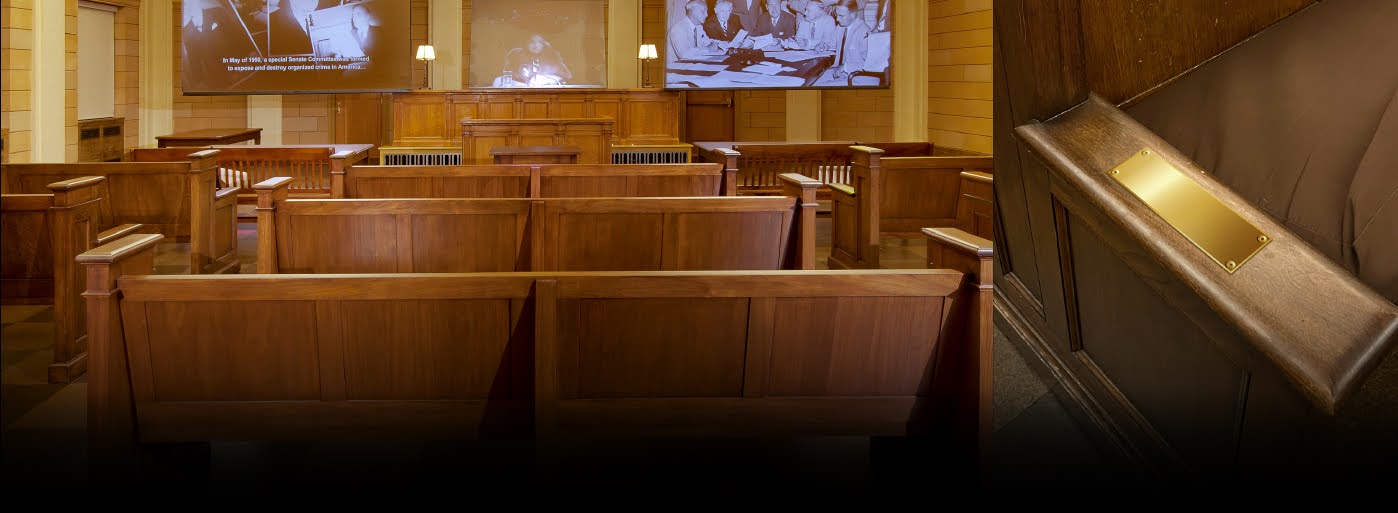
We didn’t just live it, we curated it. We sell tickets to it. We built an entire museum downtown to help visitors understand how rackets work, how power hides in plain sight, and how “legitimate business” can still be profoundly unethical.
So when I read a JAMA Pediatrics study (summarized by U.S. News, as the full article is behind a paywall) showing that private equity firms quietly acquired at least 574 autism service delivery sites across the U.S., with nearly 80% of those deals happening in just four years (2018–2022), my reaction wasn’t just academic curiosity.
It was recognition.
For readers unfamiliar with private equity, here’s the short version: private equity firms are not healthcare organizations. They are investment firms. Their business model is to buy existing companies, rapidly increase revenue, cut costs where possible, consolidate operations, and sell the company a few years later at a profit. Their legal obligation is not to patients, it’s to investors.
That model can work in many industries.
It becomes dangerous when applied to pediatric healthcare.
Because when you combine:
- profit-seeking investors,
- a vulnerable population of children with disabilities and their families,
- a publicly funded reimbursement stream,
- minimal transparency requirements,
- and a care delivery model that already over-values compliance and billable hours…
You don’t get innovation.
You get a protection scheme with a clinical license.
In this context, the therapy model most compatible with private equity’s incentives is Applied Behavior Analysis (ABA): a system whose approach is easy to standardize, scale, staff cheaply, quantify, and bill by the hour. The autistic community has been sounding the alarm on ABA for decades, raising concerns about its emphasis on compliance, normalization, and surface-level behavior change. Growing bodies of research and lived experience question the strength of its long-term evidence base and highlight the potential harms associated with its application.
If I ran the Nevada Health Authority, I would halt all private equity acquisitions of autism therapy centers in our state. Immediately.
And to understand why, we need to talk about ABA, money, and who benefits when compliance becomes a commodity.

First: What Is ABA, Really?
Applied Behavior Analysis (ABA) is often introduced to families as “the gold standard” of autism therapy.
At its core, ABA is a behavior-modification system rooted in conditioning. Desired behaviors are reinforced. Undesired behaviors are reduced through repetition, prompting, and extinction. Progress is measured through observable, countable behaviors, i.e., what can be seen, tracked, and graphed.
On paper, that sounds tidy.
In practice, it can be reductive.
Too often, autism care under ABA becomes less about supporting development and more about training children to appear less autistic: quieter, more compliant, more convenient for adult systems. The goal shifts from understanding the child to managing the child.
Autistic advocates, researchers, and self-advocates have been raising alarms about this for decades. Their critique is not subtle, and it is not fringe. The autistic rights movement and the autistic self-advocacy network identify ABA as controversial. They reject its implementation “due to a perception that it emphasizes normalization instead of acceptance, and a history of, in some forms of ABA and its predecessors, the use of aversives, such as electric shocks.”
At its core, ABA prioritizes:
- external behavior
- compliance with adult expectations
- surface-level metrics that look good on a chart
What it frequently ignores:
- sensory processing differences,
- emotional regulation,
- trauma responses,
- nervous system overload,
- autonomy, agency, and lived experience
- developmental milestones in speech and language, motor skills, and functional abilities
In ABA, behavior is treated as the problem rather than as information.
When success is defined by “quiet hands,” forced eye contact, or sitting still beyond a child’s neurological capacity, we are no longer providing therapy. We are enforcing norms. That distinction matters.
So does the distinction in credentials of ABA providers.
To become an ABA technician, also known as a Registered Behavior Technician (RBT), the requirements are:
- A high school diploma
- A 40-hour online course
- And an 85-question multiple-choice exam
That is the full requirement.
You can be certified faster than it takes to binge-watch Stranger Things, and then be placed in direct, unsupervised contact with children who have complex neurodevelopmental profiles. Children who would otherwise require evaluation and treatment from licensed clinicians with years of graduate education and supervised training.
This is not a critique of individual RBTs. It is a critique of a system that normalizes minimal training for maximum responsibility.
And here’s the uncomfortable truth:
Compliance scales well. Ethics do not.
ABA did not become dominant because it is the most humane, comprehensive, or developmentally informed approach. It became dominant because its care delivery model is:
- easy to standardize,
- easy to delegate,
- easy to quantify,
- easy to bill by the hour,
- and cheaper for clinic owners and investors.
The system rewards volume, intensity, and time-based billing.
More hours.
More sessions.
More revenue.
When therapy is structured around time as the product, it becomes irresistibly attractive to anyone whose primary obligation is growth.
Which brings us to private equity and the financial incentives that keep the ABA machine running.
Investors Follow the Money. Kids Follow the Rules
Healthcare professions, including occupational therapy, medicine, physical therapy, speech-language pathology, psychology, and yes, even ABA, have spent decades trying to improve health and participation outcomes for autistic individuals. That work has been imperfect, evolving, and often contested, but it has largely been driven by clinical inquiry, ethics, and patient need.
Private equity’s interest in autism therapy followed a different timeline.
The vast majority of private equity acquisitions in autism services occurred after 2014, when the Centers for Medicare & Medicaid Services clarified that all state Medicaid plans must cover autism screening, diagnosis, and treatment. Overnight, autism care became a federally guaranteed, publicly funded revenue stream.
Investors noticed.
The authors of the JAMA Pediatrics study stop short of claiming that these acquisitions caused direct harm to patients. But in healthcare, intent matters. And it’s worth asking: when investors wait to enter a space until it is deemed financially fertile, what exactly are they investing in? Care, or cash flow?
The answer becomes clearer when you look at where private equity concentrates its acquisitions. Autism therapy centers are most likely to be acquired in states with:
- higher autism prevalence,
- more generous insurance mandates,
- fewer age caps,
- and fewer limits on service intensity or spending.
Translation: investors follow reimbursement, not outcomes.
ABA fits this model perfectly.
ABA is not just a therapeutic approach; it is a billing structure. Its emphasis on hourly delivery, compliance-based goals, and standardized protocols makes it exceptionally easy to scale. More hours look like more care. More care looks like better outcomes. And better outcomes justify even more hours.
But time is not the same thing as effectiveness.
Multiple reviews and lived experiences have raised serious concerns about whether intensive ABA meaningfully improves long-term quality of life, autonomy, or participation for autistic individuals, while its costs to children, families, clinicians, and Medicaid programs continue to climb. When success is measured by compliance and endurance rather than regulation, engagement, or well-being, harm doesn’t always show up immediately. It shows up down the line, in burnout, trauma, family strain, and lifelong disengagement from care.
Private equity doesn’t create these problems, but it amplifies them.
Under private equity ownership, ABA hours expand beyond clinical need. Access shifts toward patients who are more profitable to serve. Medicaid spending climbs, not because children are doing better, but because more hours are being billed.
None of this is theoretical in Nevada.
Our state already struggles with workforce shortages, uneven rural access, and families navigating fragmented systems with little guidance or support. When Wall Street capital enters that landscape without meaningful service standards or oversight, the result is predictable: consolidation without coordination, growth without accountability, and cost without corresponding benefit.
This is why the question is not whether private equity should invest in healthcare.
It’s whether we should allow it to dominate a pediatric disability service model whose evidence base is contested, whose outcomes are poorly defined, and whose harms are borne by children, families, and taxpayers, not investors.
I don’t ask for much. But as an occupational therapist with eight years of education, a doctoral degree, national board certification, supervised clinical training, and state licensure, I will ask this:
Can we please keep Wall Street out of the therapy room? And invest instead in evidence-informed, interdisciplinary, developmentally grounded care models centered on the lived experience of autistic individuals?

This Is Not About “Hating ABA.” It’s About Power.
This is not an attack on individual clinicians trying to do their best within a constrained system. It is not a condemnation of families seeking support. And it is certainly not an indictment of autistic children receiving services.
This is about power.
Specifically, who holds the power to decide:
- how much therapy a child is said to “need,”
- which outcomes count as success,
- when treatment continues or ends,
- and who benefits financially from those decisions.
Right now, too often, those decisions are not being driven by children or families. They are being shaped:
- by corporations with fiduciary duties to investors,
- through a therapy model that rewards volume and endurance,
- within a system that offers limited transparency about long-term outcomes.
That’s not healthcare.
That’s extraction.
And yes, this pattern is familiar to my fellow Mob Museum friends. Systems of extraction tend to follow the same playbook:
- enter spaces where people are desperate for help,
- control access to scarce resources,
- normalize overuse as “necessary care,”
- make themselves indispensable,
- and quietly collect while everyone else absorbs the cost.
Which brings us back to Nevada.
Nevada’s children should not be revenue streams.
Autistic kids should not be growth markets.
Disability services should not be acquisition opportunities.
Public insurance should not be a private equity playground.
What Nevada needs are autism care models that are:
- developmentally informed,
- evidence-informed and outcome-driven,
- trauma-aware,
- neurodiversity-affirming,
- interdisciplinary by design,
- shaped and evaluated with meaningful input from the autistic community,
- and led by licensed professionals with deep clinical training.
That means elevating occupational therapy, not as an add-on, but as a core component of care.
Occupational therapy providers are trained to ask different questions:
- What is this child communicating through their behavior?
- What is this child’s nervous system telling us?
- What sensory, emotional, or environmental factors are shaping participation?
- What supports create regulation rather than suppression?
- How do we build capacity without erasing identity?
- How does this family function in real life, not just in a clinic room?
We don’t sell stillness.
We support participation.
We don’t demand compliance.
We build capacity.
A Broader Coalition Is Raising the Same Concerns
These concerns are not mine alone.
The Nevada Therapy Alliance, a statewide coalition representing licensed occupational, physical, and speech-language therapy providers, penned a formal letter to the U.S. Department of Health and Human Services calling for a federal reassessment of Applied Behavior Analysis (ABA) funding and a redirection of autism care toward evidence-informed, developmentally grounded interventions.
The Alliance’s letter outlines:
- the escalating financial burden of ABA on Medicaid and public systems,
- concerns about limited oversight and minimal training requirements,
- the expansion of ABA into complex medical and developmental conditions beyond its scope,
- and the downstream consequences for children, families, schools, and long-term independence when skilled therapies are underfunded or delayed.
The letter advocates for better care. Care delivered by licensed clinicians with medical training in development, communication, motor systems, sensory regulation, and functional participation.
It echoes the same conclusion reached throughout this piece: when reimbursement incentives prioritize volume and compliance over outcomes and development, children and taxpayers lose.
Read the full Nevada Therapy Alliance letter here
If I Ran the NVHA…
I wouldn’t wait ten years for outcome studies while children are over-treated and mis-treated today.
I would restore accountability, realign incentives, and center children over capital:
1. Restore Oversight and Public Accountability
- Pause approval of new private equity acquisitions in pediatric therapy and review acquisitions from the past decade.
- Require full ownership and financial transparency for all pediatric therapy providers receiving public funds.
- Establish a Citizens with Disabilities Advisory Council with formal representation in NVHA leadership and governance.
- Set statewide interdisciplinary standards of care and supervision in pediatric therapy.
2. Realign Funding With Evidence and Outcomes
- End preferential reimbursement and automatic authorization of high-intensity ABA services without interdisciplinary justification.
- Conduct a formal, transparent review of ABA outcomes, costs, and long-term impact, including autistic lived experience.
- Redirect cost savings toward licensed, evidence-informed therapies such as occupational, physical, and speech therapy.
- Increase reimbursement rates and reduce network exclusions for therapies that demonstrate functional, developmental impact.
3. Redefine What “Success” Means in Autism Care
If I ran the Nevada Health Authority, we would stop measuring autism therapy success by quiet compliance and start measuring it by meaningful participation, emotional regulation, and engagement in daily life.
We would shift the question from “How do we control this child?” to “How do we support this nervous system?”
And we would finally align the care model with what children and families actually need:
- ✅Occupational therapy integrated under physician oversight
- ✅Behavior technicians appropriately supervised within interdisciplinary teams
- ✅People over protocols
- ✅Function over obedience
- ✅Clinical decision-making insulated from corporate and investor pressure
- ✅Autistic lived experience guiding every level of care
Because the truth is this: not all “therapies” are created equal. And not all “evidence” is ethically neutral.
Our shared objective should be clear: to ensure that children with autism receive interventions that respect their dignity, support their developmental needs, and demonstrate measurable, meaningful progress in daily life.
Nevada has been here before.
We know how rackets operate.
We know who gets hurt when oversight disappears.
If we can spot exploitation on the Strip, we can recognize it in healthcare.
And if I ran the Nevada Health Authority, I wouldn’t stand for it.
Neither should you.